SME Strategy: Your Roadmap to Success
Key takeaway: A solid strategy is the engine of growth and long-term sustainability for your SME. It gives you direction, turns uncertainty into opportunity, and helps you move forward with confidence. With SMART goals and agile execution, you can build lasting success. Business diagnosis or strategic planning: are you ready to chart your roadmap?
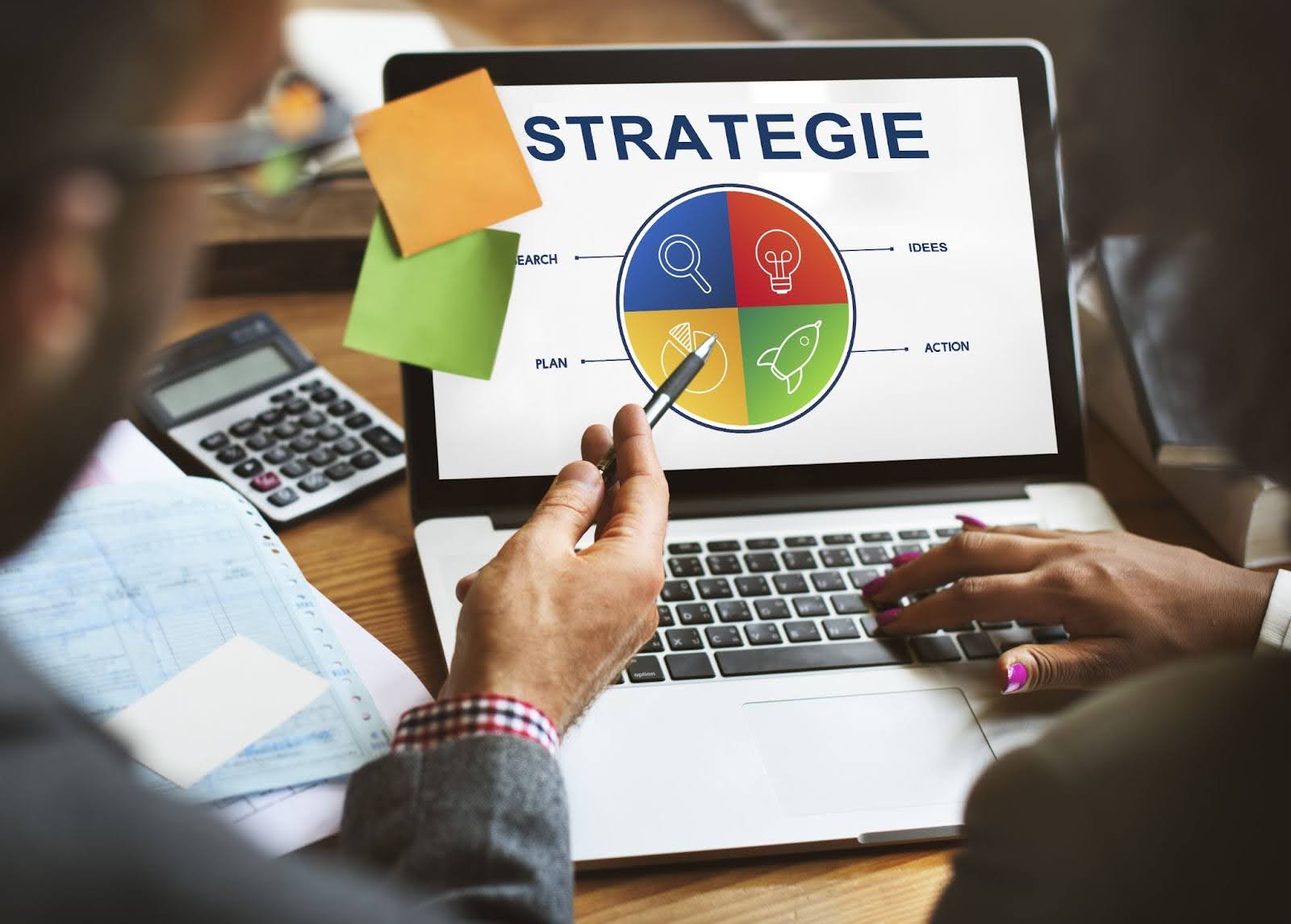
Managing an SME often feels like navigating an obstacle course: daily tasks pile up, priorities become unclear, and growth is difficult to measure. Without a clear direction, even the most serious efforts lead to stagnation. A well-designed strategy isn’t just a document—it’s an active compass that guides your decisions and actions.
We support you step by step to strengthen your resilience, optimize your marketing with a limited budget, and align your initiatives with your long-term goals. Discover how to turn challenges into opportunities, retain your customers, and build a flexible structure that grows with your company.
Together, let’s build a future where you thrive instead of simply surviving:
1- Lay the foundations with the five steps of your strategic plan
2- Practical growth strategies for your SME
3- Low-cost marketing to accelerate your growth
4- Build a Resilient and Adaptable Business Framework
5- From plan to action: execute and refine your strategy
Why Strategy Is the Foundation of Your SME’s Success
From survival to prosperity
As an SME leader, daily tasks often overshadow your long-term vision. A strong strategy transforms mere survival into true prosperity. It’s your compass for proactive growth—far more than a simple document.
Studies show that companies with formal plans increase their revenue by 12% and speed up decision-making by 30% (ScienceDirect). Without this roadmap, stagnation is likely. With it, you can confidently tackle challenges.
SMEs without a clear plan struggle to grow. A well-defined strategy unites your team around shared goals:
- it clarifies priorities and optimizes resource allocation,
- it increases efficiency and profitability.
Your roadmap evolves alongside your business, ensuring continuous progress. It’s the key to long-term success.
To navigate uncertainty
Today’s market is unpredictable and constantly changing. Your strategy must be flexible, not rigid:
- Use AI, cloud tools, and customer feedback to pivot quickly,
- Validate your innovations before deploying them widely to avoid costly mistakes. This adaptability transforms threats into opportunities,
- digital transformation is accelerating: adopt new tools,
- set up a dual operating system: one structure for stability, another for change. SAFe frameworks streamline value creation. Stay ahead by adapting continuously;
- low-cost marketing strategies are essential. Focus on targeted, high-impact actions. Build strong customer relationships to boost retention and secure growth.
Lay the foundations: 5 essential steps of your strategic plan
1- Define your vision and mission
Clearly define your vision and mission:
- your mission explains your company’s purpose today—solving your clients’ specific problems,
- your vision sets long-term goals (5 to 10 years),
- ask yourself: what unique value do you offer? Who is your ideal customer? How does your team contribute?
This foundation guides every strategic decision and unites your team around a shared goal. Start with a clear vision to craft a strong growth roadmap that is adaptable to market changes. It’s the first step toward long-lasting success and resilience.
2- Conduct a 360° analysis
Perform a SWOT analysis to assess your strengths, weaknesses, opportunities, and threats. Without this, you may miss key market shifts and competitor initiatives. It’s essential for informed decisions and a forward-looking strategy.
Conduct a thorough market study to understand your competitors and industry trends. This external view highlights gaps to exploit and risks to mitigate.
Don’t let blind spots limit your growth potential. Proactively identify opportunities and tackle challenges to maintain a competitive edge. Continuous monitoring is vital for long-term success.
3- Set SMART goals
Set SMART goals: Specific, Measurable, Achievable, Realistic, and Time-bound.
For example: increase customer retention by 15% in 12 months, or acquire 50 new customers through targeted marketing in six months. Clear goals keep your team focused and aligned.
Without measurable targets, growth plans remain abstract and vague. SMART goals turn aspirations into concrete actions that lead to real progress and quantifiable results. Track each step to stay on course.
4- Develop your key strategies
Develop strategies aligned with your SWOT analysis. Prioritize adaptability and innovation through cost-effective tactics like social media marketing or loyalty programs. These approaches leverage your strengths and opportunities.
Stay flexible: adjust your strategies as the market evolves to remain competitive and ensure sustainable growth. Progressive, scalable actions ensure steady progress without excessive risk or resource strain. Adaptability is essential to thriving in dynamic markets.
5- Build an action plan
Create a detailed action plan. Assign clear tasks, deadlines, and responsibilities. Use the five steps of strategic planning as your roadmap toward success and accountability.
Track your progress weekly and celebrate even small wins. Consistent execution maintains momentum and ensures accountability. Start today—growth begins with action and commitment. Every step counts.

Practical Growth Strategies for Your Small Business
Focus on customer retention
Acquiring new customers costs 5–7 times as much as retaining existing ones. A 5% increase in retention can boost profits by 25% to 95%.
Many small businesses overlook this, focusing only on acquisition. Yet loyal customers spend more, refer others, and reduce your costs:
- launch simple loyalty programs, such as digital punch cards,
- request and respond quickly to customer feedback,
- personalize communications and offers based on individual preferences,
- provide exceptional after-sales service to build trust.
Example: Erika, a hairstylist in Halifax, increased her loyal customer rate from 40% to 72% through SMS reminders, a VIP program, and a digital loyalty card—without increasing acquisition costs. Tools like HubSpot’s free CRM help track these interactions effectively.
Innovate your products or services
Innovation isn’t reserved for tech giants. Small businesses can boost growth by improving existing products or services to meet real customer needs.
Start with a Minimum Viable Product (MVP) to test concepts safely. Avoid risky launches without validation. Focus on solving specific problems identified through market research.
Use the Job-To-Be-Done framework to understand customer motivations. Address functional, social, and emotional needs for long-lasting impact.
Even minor adjustments can create significant value. Validate ideas with customers before a large-scale launch. For example, a bakery in Toronto added gluten-free options in response to customer requests, increasing sales by 30%.
Explore new markets and channels
Expand your reach by exploring new channels with minimal risk. Start small: test online platforms like Amazon or Etsy before building your own e-commerce site.
Optimize the customer experience for mobile and social media shopping. Over 60% of shoppers discover products through platforms like Instagram and Facebook.
Highlight “Made in Canada” to spark local pride. Eco-friendly packaging and sustainable practices resonate with environmentally conscious consumers. Use free tools like Canva for content and Mailchimp for email campaigns. These affordable strategies help you reach a wider audience at a lower cost.
Collaborate with local communities or professional groups to build partnerships. Test new markets regionally before expanding. Social commerce features on Instagram and Facebook enable direct purchases, increasing conversion rates.
Cost-Effective Marketing to Accelerate Your Growth
Build a Strong Online Presence
Don’t let your business go unnoticed. 47% of SMEs use online directories to boost their visibility. Start by creating your Google My Business listing — it’s free and improves your local search ranking.
Optimize your Google My Business profile to appear in local search results. This free tool makes you easily visible on Google Maps and in Search.
Responding to online reviews strengthens your credibility. 64% of businesses respond to customer feedback, indicating they value customer satisfaction. A fast, mobile-friendly website is essential.
Use free tools like Google PageSpeed Insights to improve loading times. Stay active on relevant social platforms. Share high-quality content without relying on paid ads.
Leverage Content Marketing
Content marketing focuses on delivering real value. Start by identifying the challenges your audience faces:
1- Identify the problems of your clients and prospects,
2- Create relevant content that answers their questions (blog articles, short videos, guides),
3- Share your content on your preferred social media platforms,
4- Use a simple newsletter to nurture your audience.
Blog posts that address common questions generate 55% more traffic. Optimize your SEO for better Google rankings.
Repurpose your content across multiple channels to maximize reach. A webinar can become a blog post, then clips for social media. This strategy helps you make the most of your resources.
For a tailored marketing strategy aligned with your specific goals, refer to our dedicated guide. This ensures your efforts remain aligned with your business objectives.
Encourage Partnerships and Collaborations
Partner with non-competing local businesses to share marketing costs.
Example:
- A bakery and a café can cross-promote to each other’s customers — shared values and mutual trust are key.
- A boutique and a hair salon can co-host a “Style Night.” Each promotes the event to its customer base, splitting costs and doubling attendance.
These collaborations strengthen community bonds and attract new loyal customers.
Co-marketing campaigns allow you to share advertising expenses. For example, co-sponsoring a local event broadens your audience without straining your budget.
Clearly define each party’s role in a written agreement—track results together to measure success. Building trust within the community strengthens your brand while optimizing your budget.
Build a Resilient and Adaptable Business Framework
Integrate Technology and Automation Strategically
93% of SMEs use outdated technology, resulting in lost time, errors, and increased costs of up to 25%. Investing in modern tools is not an expense — it’s a growth engine:
- CRM systems, project management tools, and email automation streamline operations,
- AI provides affordable data analysis for more intelligent decisions.
A modern CRM centralizes customer data, improving communication and personalization. This boosts satisfaction, loyalty, and repeat purchases. A CRM can increase resale value by 20-40%. Automation handles repetitive tasks, freeing your team to focus on strategic initiatives. Real-time analytics enable faster decision-making.
Canadian SMEs can start small by automating email campaigns or using basic CRM tools—scale based on results. Targeted emails can increase sales by 30%, showing that cost-efficient growth is possible.
Foster a Culture of Agility
Adopt a systems-thinking approach to understand how departments interact. It’s not about isolated processes but how the entire ecosystem functions. Systems thinking links recruitment, sales, and operations to support better decisions.
Focus on efficiency, performance, and flexibility. Agile cultures detect risks early and adapt quickly, avoiding costly setbacks. Small businesses thrive when they view their operations as interconnected systems.
Document processes, but focus on the system as a whole. A procedure is just one step; a system is how everything works together. This prevents patchwork solutions and ensures long-term stability.
Align Your Finances With Your Strategy
| Areas of Focus | Growth-Oriented Spending (Examples) | Resilience-Oriented Spending (Examples) |
|---|---|---|
| Marketing | Dynamic advertising campaigns, influencer marketing | SEO optimization, content creation, community management |
| Technology | Experimental cutting-edge tools | CRM software, cybersecurity measures, automation tools |
| Human Resources | Rapid hiring for new roles | Employee training and development, implementation of clear processes |
| Finance | High-risk investments for high returns | Building cash reserves, securing a line of credit |
Prioritize SEO over expensive ads. Invest in CRM and cybersecurity rather than experimental tools. Focus on training and cash reserves to ensure stability.
Finance and marketing teams are often misaligned. Create shared KPIs and unify data to improve efficiency. Review expenses regularly to ensure consistency.
Favor lines of credit over high-risk investments. Maintain resilience while driving growth. Minor adjustments today help prevent future setbacks.
From Plan to Action: Execute and Refine Your Strategy
Track Your Progress With Key Performance Indicators (KPIs)
Without rigorous KPI tracking, your SME could lose up to 20% of its potential revenue. Precise metrics ensure your growth strategy remains relevant and achievable. Here are the most important indicators:
- Financial KPIs: revenue growth, profit margins, cash flow,
- Customer KPIs: customer lifetime value (CLV), churn rate,
- Marketing KPIs: website traffic, conversion rates, cost per acquisition.
These indicators guide decision-making and optimize resource allocation.
For example, monitoring cash flow prevents liquidity crises. Use a well-designed dashboard to visualize key metrics and steer your business confidently toward sustainable growth. Real-time insights lead to informed decisions.
Delegate to Empower Your Team
Trying to do everything yourself leads to burnout and missed opportunities. Effective delegation frees time for strategic growth and innovation. Trust your team and allow them to take ownership.
Delegation strengthens team skills and improves overall efficiency. By empowering your employees, you focus on high-impact decisions. Explore inclusive delegation to improve collaboration and innovation.
When tasks are distributed effectively, accountability and trust grow. Your role evolves into that of a visionary leader.
Evaluate and Adapt Regularly
Sticking rigidly to a static plan can cost you market share. Regular reviews ensure your strategy remains agile and aligned with changing conditions. Don’t wait until it’s too late to adjust.
Hold quarterly reviews to assess progress and refine tactics. A dynamic strategic plan keeps your company competitive and aligned with its objectives. Agility is key to long-term success.
A monthly performance review quickly identifies trends. Rapid adjustments help you stay ahead of competitors. Flexibility turns challenges into growth opportunities.

Conclusion
Your next strategic step starts with a clear vision. Without a strong plan, small businesses react to daily challenges instead of driving growth. A well-defined strategy unifies your team and turns obstacles into opportunities.
Track key indicators, such as cash flow, to adapt quickly. Focus on cost-effective marketing and strong relationships to maximize your ROI. Use digital tools to optimize operations. This keeps your business resilient and ready to seize opportunities.
An effective small-business strategy combines a clear vision, deep customer knowledge, agility, and disciplined execution. It’s not a constraint — it’s your main lever for growth.
Ready to create a solid roadmap? We can support you with a full business diagnostic or guide you through your strategic planning.